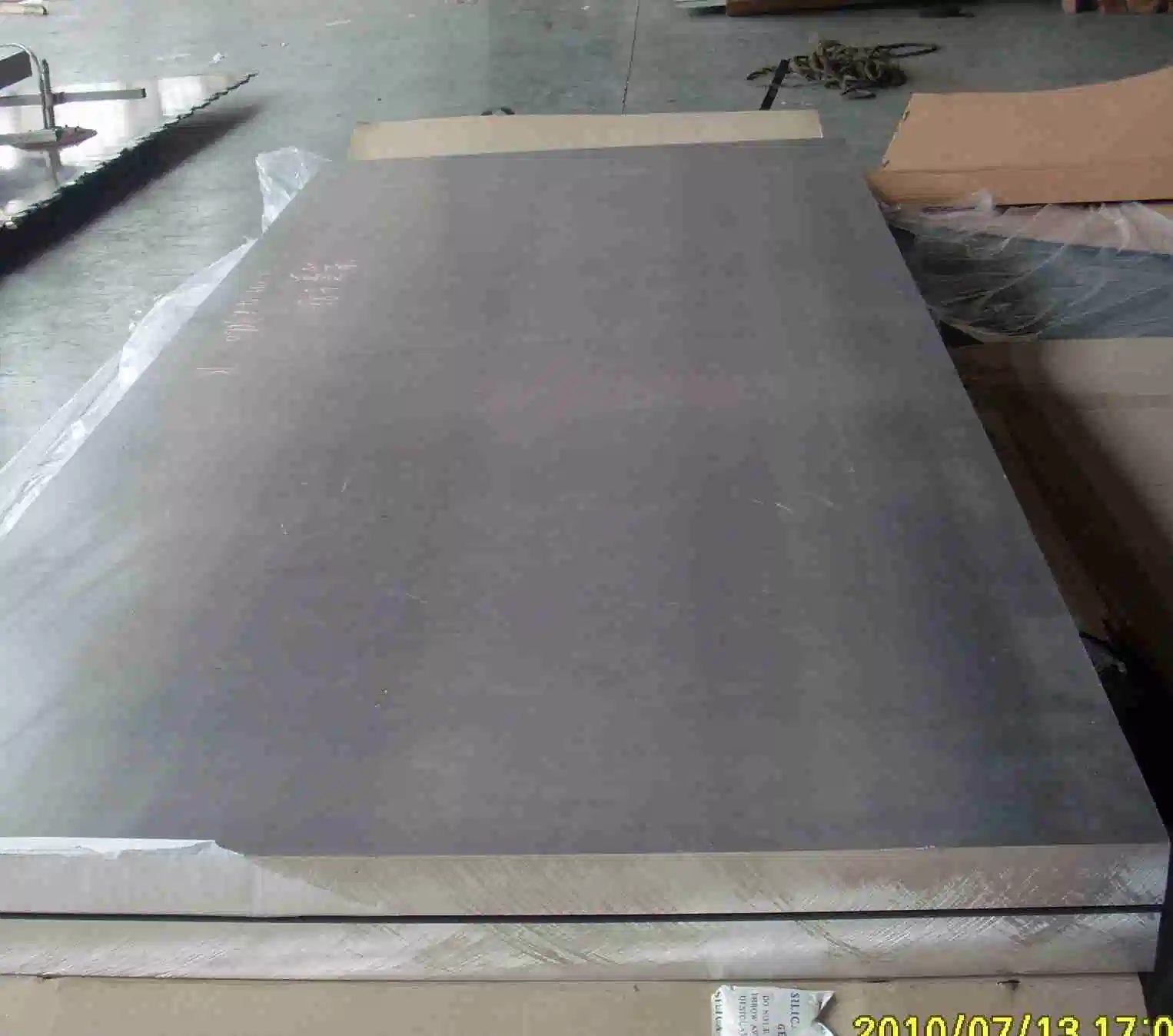
Buyers ask for '5052 or 6061' as if the two were prices for the same metal. They are not. 5052 gains its strength from magnesium and strain hardening — it is supplied in H tempers and cannot be heat treated — and it is the alloy this catalogue's marine and sheet listings are built around. 6061 gains its strength from a magnesium-silicon precipitation treatment — it is supplied in T tempers — and it is the alloy of machined parts, moulds and structural sections. Choosing between them is choosing a manufacturing route first and an alloy second.
The two alloys in this catalogue
| 5052 — published tempers | H32, H34, H38, H111, H112, H114, O |
|---|---|
| 5052 — published thickness | 0.5–150 mm |
| 5052 — published packing note | About 2 mt per pallet (listing) |
| 6061 — published forms | Aluminium sheet; hot rolled mould plate (listed with 6063); brushed finish plate for oxidation (anodising) |
| 6061 — specification basis | Form-specific; sheet and plate figures confirmed per enquiry against the 6061 listings |
| Shared ground | Both are weldable, corrosion-resistant mid-strength alloys; the difference is how strength is produced and what fabrication follows |
Forming is the first fork. 5052 in its softer H tempers (H111, H32) bends and deep-draws well, which is why it is the sheet of fuel tanks, boat hulls, enclosures and architectural panels — and why the 5052 listing publishes a thickness range running from 0.5 mm sheet to 150 mm plate. 6061 in T6 condition is comparatively reluctant to bend tightly; it rewards machining instead. If the part is folded, choose from the 5052 temper ladder. If the part is milled, drilled and tapped, 6061-T6 is the standard answer and the mould plate listing (6061/6063) is this catalogue's expression of that role.
Corrosion is the second fork, and it is narrower than folklore suggests. 5052's magnesium content gives it the stronger marine reputation, and the marine plate programme in this catalogue is a 5xxx programme (5052, 5083, 5754). 6061 is a good general corrosion performer but is rarely the first choice for direct seawater service. For a boat, tank or coastal structure, the 5xxx side of this comparison is the documented one; for a machine frame, jig or mould inland, 6061's machinability usually decides.
Anodising is the third fork, and it cuts the other way than many expect: this catalogue lists a brushed finish 6061 plate expressly for oxidation — 6061 anodises to a clear, hard, decorative finish, while high-magnesium 5xxx anodising can be less cosmetically uniform. If the finish is the product ( architectural and decorative parts), read the anodized sheet page as well; if the finish is protective only, either alloy serves.
Cost follows the route, not the alloy name. 5052 sheet in a standard temper is a commodity purchase against a published range; 6061 plate for machining adds sawing, and mould plate adds the flatness and thickness discipline mould work needs. The honest comparison is therefore a quoted pair: send the drawing once, ask for 5052 in the temper your forming needs and 6061 in T6, and compare finished-part cost — blank plus forming versus blank plus machining — rather than per-ton metal price.
Can 6061 replace 5052 in a marine part?
Not as a like-for-like swap. The catalogue's marine grade programme is 5xxx (5052/5083/5754). A redesign to 6061 is an engineering decision about corrosion exposure, not a purchasing substitution.
Which bends better?
5052 in H111/H32-type tempers is the forming alloy here; 6061-T6 is the machining alloy. The temper matters as much as the alloy — see the temper guide.
Which is stronger?
6061-T6 reaches higher strength after heat treatment; 5052's strength tops out at its hardest H tempers. 'Stronger' only decides the question if the part is not formed or marine-exposed.
Get a written quotation
Send the alloy, temper, thickness, width and quantity you need. Quotations state the applicable minimum order and lead time for that exact specification.
Ask for a paired 5052 / 6061 quotation