The supplier publishes sheet in two ways: as grade sheet (1050, 1100, 3003, 5052, 6061 and others, each with its own specification on the grade pages) and as finish-defined sheet — mirror sheet, stucco embossed sheet, tread sheet, polished sheet and painted sheet. Pick the finish family first, then confirm the alloy and dimensions against the grade specification or in the quotation.
Sheet families in the published range
Mirror aluminum sheet
1085/1070 mirror plate sheet, 0.3–1.0 mm thick, 250–1500 mm wide, bright finish.
Stucco embossed aluminum
Orange-peel embossed sheet in 1000/3000/8000 series alloys.
Aluminum tread plate
2, 3 and 5 bar tread patterns; checker and diamond plate are the same product under other names.
Anodized aluminum sheet
Anodized copper brush finish coil sheet, including a 5005 anodized line.
Prepainted aluminum sheet
Painted, PE coated, powder coated and PVDF coated sheet from the coated range.
Aluminum sign blanks
Sign blanks plate for sign making, kept separate from license plate blanks.
Sheet thickness in this catalogue is grade- and finish-specific rather than a single range: the mirror listing publishes 0.3–1.0 mm, the tread listing publishes 1.00–6.50 mm in mill finish, the painted sheet listing publishes 0.25–1.8 mm, and the grade pages publish 0.2–6.0 mm for coil-fed sheet grades such as 1050, 1100 and 3003. Quoting a sheet order therefore starts from the family and grade, not from a generic sheet range — send both, plus the finish, and the reply will work from the matching listing.
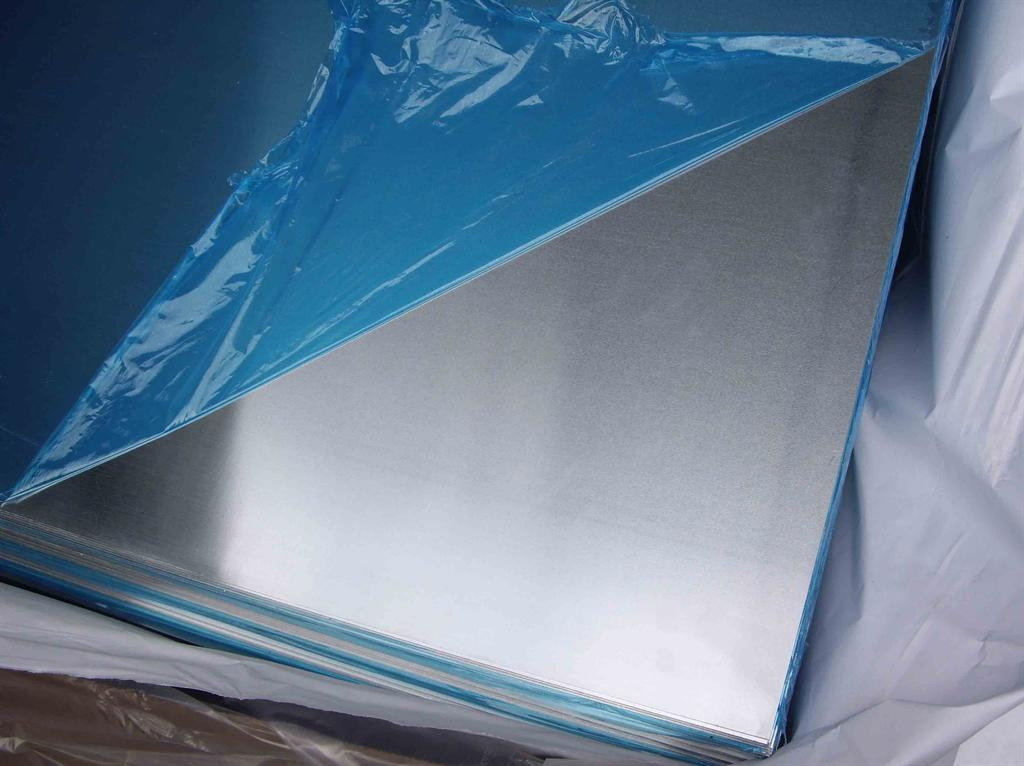
Protective film is part of the published picture for bright sheet: the photograph above, from the supplier's own welding sheet listing, shows the film partly peeled from a sheet stack. If your fabrication route needs film on one or both faces — or needs it absent — state it in the enquiry so the quotation covers the same condition you will receive.
Sheet formats and finishes, as published
The sheet programme divides by finish because the finish decides the production route. Mill finish sheet is the coil-fed grade sheet of the grade pages. Bright and polished sheet appears in listings such as the polished alloy sheet (1050/3003/3150/5052/6061/8011) on the storefront. Mirror sheet is its own listing family in 1085 and 1070. Stucco embossing is a rolled pattern, tread is a heavier rolled pattern, and anodised and painted sheet are surface-treated products with their own pages. A sheet enquiry that names only the alloy is therefore half a specification; the finish is the other half.
One practical consequence: minimums and lead times follow the family, not the alloy. The painted and coated families publish their own figures (the powder coated listing, for instance, publishes a 300 m² minimum and around 15 days delivery depending on drawings and quantity), while coil-fed grade sheet follows its own grade listing — 5 tons per size on the 1050, 1060, 1100 and 3003 listings, with other grades stating their own minimums (1350: 2 tons). Each family's figures belong to that family only.
Which sheet grade is most common for general fabrication?
3003 and 5052 are the workhorse sheet grades in this catalogue; the 5052 vs 6061 guide explains how buyers choose between the 5xxx and 6xxx families.
Can sheet be supplied cut to length?
The painted sheet listing publishes lengths coiled or cut to 2000–4000 mm; other cut lengths are confirmed per order in the quotation.
Is mirror sheet real mirror finish or just bright?
The listing describes a mirror plate sheet in 1085/1070 with a bright finish and states the sheet is produced as mirror material that avoids a separate polishing step. Judge it against a sample if the finish is critical — samples are the normal route for finish-critical orders.
Get a written quotation
Send the alloy, temper, thickness, width and quantity you need. Quotations state the applicable minimum order and lead time for that exact specification.
Request a quotation for this product